
From quicker ordering to more time with friends, students across the UK are embracing Self-Serve Kiosks in school dining halls. Using a simple touchscreen, students can choose their meal and pay with a cashless catering account, which helps to reduce queues and speed up lunch service. But beyond speed and convenience, what makes them so popular with students?
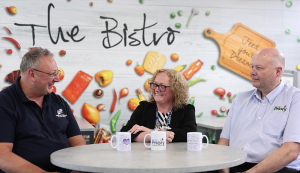
We spoke to secondary school students who use kiosks every day. Watch the video below to see how they order their favourite school meals and what they enjoy most about the self-serve experience.
What are students saying about Self-Serve Kiosks?
It’s faster, and you know how much money you have to spend.
Student, Penwortham Priory
They’re similar to the ones that you get at McDonald's, Burger King, or something like that. It’s easy to use; you get the gist of it really quickly.
Student, Penwortham Priory
I can now go to the computing club at lunch as I don’t have to queue for ages.
Student, Penwortham Priory
Self-Serve Kiosks for schools FAQs
School dining halls are changing. More and more schools across the UK are adopting Self-Serve Kiosks to help speed up queues and give students more control over their lunchtime. So, how do these kiosks actually work? And what’s behind their growing popularity?
Let’s answer some of the most common questions.
Q. What are Self-Serve Kiosks in schools?
Self-Serve Kiosks are touchscreen ordering stations that let students select and pay for meals without queuing at a traditional till.
Typically, students can:
- Browse the day’s menu on screen
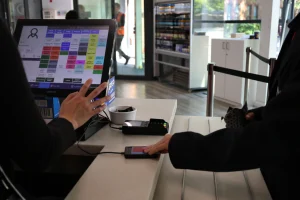
- Check their available balance with their school ID card, PIN or fingerprint biometric login
- Select their meal, drink and sides
- Pay using their cashless catering account, free school meal allowance, or payment card
- Collect their meal from the counter
Self-service kiosks are often used in school dining halls, sixth form cafés, and grab-and-go food areas to speed up service and reduce queues.
Q. Why are schools adopting Self-Serve Kiosks?
Schools use Self-Serve Kiosks to reduce queues, speed up service, and improve the overall dining experience for students.
Key benefits include:
- Increased school meal uptake – for example, Penwortham Priory saw an 8.44% increase and a 17% rise in catering revenue
- Shorter queues at lunchtime – schools like Tiffin School have significantly improved service flow
- Faster meal service during busy lunch periods
- Less pressure on catering staff – The Catering team at Penwortham Priory saves 22.5 hours each week
- More independence for students
- Improved accuracy of orders
Self-Serve Kiosks are especially effective in larger secondary schools and colleges serving high volumes of meals in a short time.
Q. How can Self-Serve Kiosks be used in different ways?
Fusion Self-Serve Kiosks offer flexible options depending on how a school wants to run its dining service.
The kiosks can be used in three ways:
- Advanced ordering – students log in using an ID card or biometrics, place their order on screen, and pay from their cashless account before collecting their food at the counter.
- Self-service checkout – students collect items first and then use the kiosk to pay, similar to a supermarket self-checkout.
- Pre-ordering – students place school lunch orders ahead of time, so their meals are ready to collect at lunchtime for a true grab-and-go experience.
All approaches use the same secure CRB Cunninghams cashless system and can be tailored to suit different dining layouts, service styles, and student needs. If you’d like to explore how different service models could work in your school, you can book an on-site visit with our team here.
Q. How do Self-Serve Kiosks work in school canteens?
Self-Serve Kiosks connect directly to a school’s cashless catering system, allowing real-time account management, reporting, and secure payments.
The process is simple:
- Students log in using a PIN, card, or fingerprint scan
- The kiosk displays the daily school menu
- Students select their items using the touchscreen
- The order is sent directly to the kitchen or service counter
- Payment is taken automatically from their catering account
This allows schools to serve large numbers of students quickly and efficiently during busy lunch periods.
Q. Do students like using Self-Serve Kiosks?
Yes. Most students find kiosks faster and easier than traditional tills. Because the interface is similar to high-street self-service systems, it feels familiar and easy to use. Schools such as Penwortham Priory Academy report higher engagement with this more modern, independent way of ordering.
Students often say that kiosks:
- Reduce queue times and make lunch less stressful
- Make it easier to browse menus
- Feel more modern and intuitive
- Help them know how much cashless catering balance or free school meal allowance they have
- Give them more time to spend with friends or attend lunchtime clubs – with schools like Penwortham Priory reporting a 20% increase in lunchtime club attendance
In the video above, you can see students confidently ordering their favourite meals in seconds.
Q. Do Self-Serve Kiosks reduce queues in school dining halls?
Yes, reducing queues is one of the biggest benefits of Self-Serve Kiosks. Instead of relying on a single service line, schools can introduce multiple ordering points, enabling students to place orders simultaneously.
This leads to:
- Faster meal ordering
- Better traffic flow in the dining hall
- More time for students to eat and socialise
Q. Are school Self-Serve Kiosks secure?
Yes. School Self-Serve Kiosks run on the secure Fusion cashless catering system, which manages pupil accounts and payments safely.
Common login methods include:
- PIN codes
- Contactless cards
- Biometric fingerprint recognition
These systems also support free school meal allowances, ensuring eligible students can access meals discreetly. For example, Penwortham Priory reported an increase of 18.97% uptake of free school meals among eligible students.
Q. What types of schools use Self-Serve Kiosks?
Self-Serve Kiosks are commonly used in:
- Secondary schools
- Academies
- Colleges and sixth forms
- Schools with high meal volumes
They are particularly effective in schools serving hundreds or thousands of meals each day within short lunch periods.
Q. Can Self-Serve Kiosks increase school meal uptake?
Yes. Many schools report higher meal uptake after introducing self-service ordering. Penwortham Priory has reported an extra 8.44% in uptake since adopting Self-Serve Kiosks.
This can happen because:
- Students can browse the menu visually
- Ordering feels quicker and easier
- Queues are reduced
- The dining experience feels more modern, like popular quick-service restaurants
When students can see their meal choices clearly on a screen, they are often more likely to try new options and make faster decisions.
Q. Are there real school examples showing the Self-Serve Kiosks in action?
Yes. We have case studies from schools using Fusion Self-Serve in different ways, depending on their dining hall setup and service style. Click on the links below to hear directly from schools.
- Penwortham Priory Academy uses Self-Service Kiosks for advanced ordering, helping streamline service and improve the overall lunchtime experience.
- Tiffin School uses the kiosks as a supermarket-style self-service checkout, supporting fast, independent payments for grab-and-go items.
You can explore more real-world examples here and see how different schools are using kiosks to improve their dining experience.
You can also find out more about Fusion Self-Serve Kiosks here.