
Epping St John’s Church of England School is a secondary school and sixth form in Epping, with more than 1,000 students enrolled. It is part of BMAT, a multi-academy trust supporting 12 schools across Essex and East London.
The Epping St John’s catering team plays an important role in creating a positive student experience throughout the school day, but before introducing Self-Serve Kiosks, lunchtime was becoming increasingly difficult to manage.
Long queues, slow tills, stock losses and frustrated students were creating pressure for both the catering team and the wider school. The challenge was clear: Epping St John’s needed a faster, more efficient way to serve students while creating a better lunchtime experience.
When lunchtime became a daily challenge
With more than 1,000 students using the school’s catering facilities, serving everyone efficiently within a relatively short lunch break was a significant operational challenge.
For students, the experience could be frustrating. Long queues meant some pupils struggled to reach the front of the queue, while others found that the food they wanted had sold out by the time they were served.
For the catering team, the slow till system created a backlog and regularly caused lunch service to overrun.
Gemma Bell, Senior Catering Manager for BMAT, explains:
“We had a very slow system, so the tills were very slow, which meant a lot of backlog, a lot of children not being able to be fed.”
The problems extended beyond queues. The school was also experiencing unexplained stock losses, particularly with products that were easy for students to pick up while moving through the queue. At a cost of around £250 a week, this had a significant financial impact.
For Clare Tyler, the trust’s Director of Estates, it was clear that the existing system was no longer working for the school.
“Children were frustrated. They were having to queue for such a long time, potentially not even get to the queue, or when they did, we may have run out of what they wanted.”
The school needed more than simply a faster till. It needed a different way of managing the lunchtime journey.
Looking beyond traditional tills
The BMAT team began exploring alternative catering solutions and discovered CRB Cunninghams’ Self-Serve Kiosk system at the LACA School Food Show.
The concept immediately stood out as a potential answer to the challenges Epping St John’s was facing:
“I really liked it. I thought it was exactly what we were looking for, and so we wanted to explore that a bit more.”
Clare Tyler, Director of Estates
The appeal was not simply the technology itself. The kiosks offered an opportunity to rethink how students moved through the catering service – giving them more control over their orders while reducing pressure on the traditional till points.
That meant the potential benefits extended well beyond speed. A more efficient ordering process could help the school reduce queues, improve stock control, minimise losses, and give students more of their lunchtime back.
A straightforward transition to self-service
Once the decision was made, implementation was designed to be as straightforward as possible for the school and its IT team. CRB Cunninghams project managed the rollout from beginning to end, supporting BMAT through each stage of the process.
“Implementation was very quick and seamless. The rollout from an IT perspective was very simple actually, because CRB Cunninghams project managed the whole process from start to end.”
Roger O’Connor, IT Director
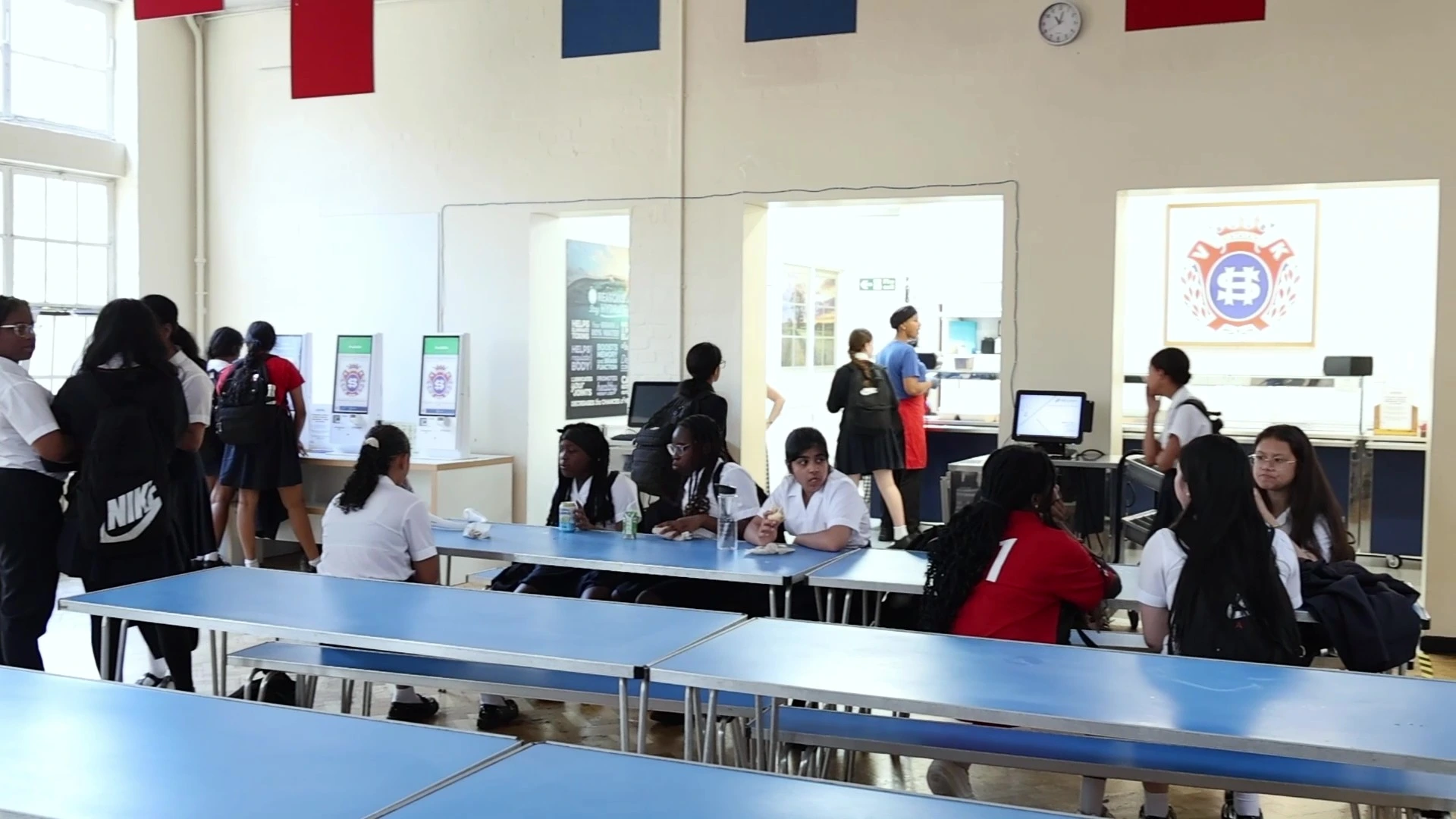
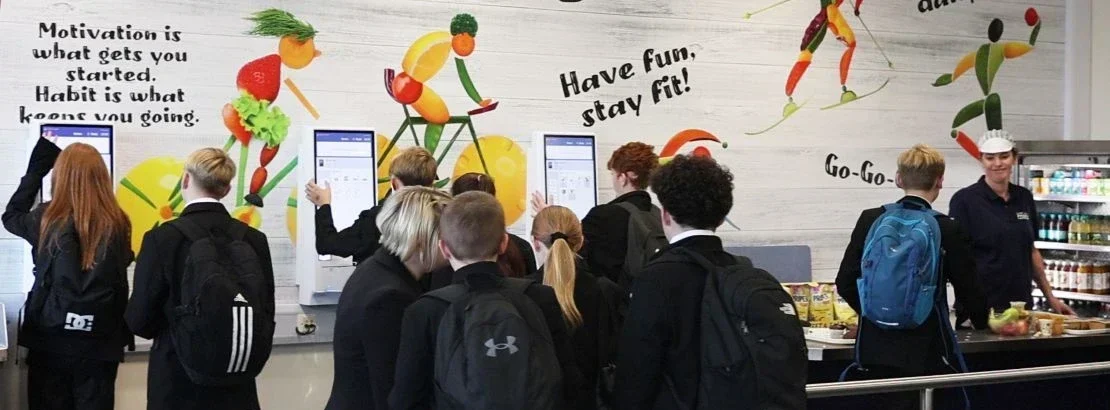
The result was a new, faster way for students to order their food. Students use the Self-Serve Kiosks to browse the available menu and complete their purchase themselves. The system also provides visibility of what is available, helping students make their choices quickly and efficiently.
For a school serving more than 1,000 students, those small improvements in each individual transaction quickly add up.
Faster service gives students their lunchtime back
One of the most immediate changes at Epping St John’s has been the dramatic reduction in queuing.
Roger has seen a significant difference between the kiosks and the school’s previous till system:
“The actual speed of the system itself as well, by comparison with our previous supplier, is significantly quicker, and it’s also improved the queuing times for students significantly.”
Roger O’Connor, IT Director
For students, the impact is particularly noticeable. One student described the kiosks as more efficient and faster, highlighting the fact that there are multiple kiosks and ordering points available.
Another student summed up the change in even simpler terms: what once took most of their lunchtime can now take around two minutes:
“Now you can actually eat, go to the toilet, refill your water bottle, and have a conversation with your friends, and you can focus on learning in class.”
Epping St John’s student
The improvement is therefore about more than reducing a queue. It is helping students make better use of the whole lunch period.
A better experience for students and staff
The new system has also changed the atmosphere around lunchtime. With fewer students waiting in long queues, there is less congestion and less pressure on catering staff. Students can move through the service more efficiently, while the catering team can focus on delivering the food and service rather than processing every transaction manually.
“The new system is really benefiting our staff and students, not just in terms of the financial gain that we have seen from the reduction of losses and the reduction in waste, but also from the wellbeing perspective.”
Clare Tyler, Director of Estates
For students, the technology has also made the process more intuitive. The kiosks clearly show what is available and what has sold out, giving students greater certainty when choosing their lunch.
“It tells you what you can and can’t get and if they’ve sold out of it and what the lunch actually is for the day.”
Epping St John’s student
That visibility removes one of the frustrations of the old system: spending time waiting in a queue only to discover that the item you wanted was no longer available.
Tackling stock losses and improving financial performance
For Epping St John’s, improving the student experience was only part of the challenge. The school also needed to address the financial impact of unexplained losses.
Since the new system was implemented, that problem has effectively disappeared, directly improving the financial performance of the catering operation.
“Since this new system’s gone in, we currently have no theft at all. It’s physically impossible to steal from our kitchen now.”
Gemma Bell, Senior Catering Manager
At the same time, faster service has encouraged more students to use the catering service, and students have more opportunity to make additional purchases because they are no longer spending their entire lunch break in a queue.
“Because the queues have dramatically gone down, they’ve got the ability to come back and purchase more food or drink.”
Gemma Bell, Senior Catering Manager
This creates a positive cycle for the school: faster service encourages greater engagement with the catering offer, while improved control eliminates unexplained loss.
“The system actually pays for itself, essentially, so the return on investment is there in the future for us.”
Roger O’Connor, IT Director
From lunchtime queues to smarter service
The transformation at Epping St John’s has changed the role of technology within the catering operation.
The kiosks are not simply replacing old tills, they are helping the school rethink the entire lunchtime experience — from how students place their orders to how quickly they move through the dining service.
For BMAT’s IT team, the change has also been operationally significant:
“It’s a game changer in terms of the actual speed and the operation and the kind of logistical side of things… It just completely changed our world.”
Roger O’Connor, IT Director
And for students, perhaps the most important outcome is simply having their lunchtime back.
A solution that works for the whole school community
The success of the Self-Serve Kiosks at Epping St John’s demonstrates how modernising the point of sale can have an impact far beyond the catering counter.
For students: shorter queues, greater choice visibility and more time to enjoy their lunch and socialise.
For the catering team: a faster, more manageable service with significantly reduced losses.
For the IT team: a straightforward implementation and a system that requires less ongoing intervention.
For finance and operations: improved financial performance and a catering operation that is better equipped to meet the needs of a large student population.
The experience has reinforced Gemma’s belief that self-service technology represents the future of school catering:
“I believe that this will be the new system in place for schools to modernise.”
Gemma Bell, Senior Catering Manager
Advice to other schools and trusts
For schools considering a move to Self-Serve Kiosks, the BMAT team suggests seeing how the technology works in a real school environment, and speaking with catering managers who can provide valuable insight into how the system works in practice.
“I would also recommend coming along to a school like ours or another school that has the system to see it live in action.”
Clare Tyler, Director of Estates
For BMAT, the decision to introduce Self-Serve Kiosks has delivered tangible improvements across the school – from eliminating unexplained loss to dramatically reducing queues. This smarter approach to lunchtime has delivered a faster, more efficient, and more positive experience for the whole school community.